
Beginner’s Guide to Forex Trading: Your First Steps Toward Success
Forex trading, the process of exchanging one currency for another in the foreign exchange market, has gained immense popularity among individuals looking to earn extra income and invest money wisely. If you’re keen on diving into the world of currency trading, our forex trading course for beginners Cameroonian Trading Platforms can provide you with the right tools. This article serves as an introductory guide, breaking down everything you need to know to get started on your forex trading journey.
What is Forex Trading?
Forex trading involves buying and selling currency pairs, with the goal of profiting from fluctuations in the exchange rates. The forex market is the largest financial market in the world, with trillions of dollars traded daily. Participants include banks, financial institutions, corporations, and individual traders. Understanding forex trading and its concepts is crucial for anyone looking to start in this dynamic environment.
Understanding Currency Pairs
In forex trading, currencies are traded in pairs. The first currency in a pair is known as the base currency, while the second is the quote currency. For instance, in the EUR/USD pair, the Euro is the base currency, and the US Dollar is the quote currency. The exchange rate tells you how much of the quote currency you need to purchase one unit of the base currency.
Currency pairs can be categorized into three groups:
- Major Pairs: These include the most actively traded currencies, such as EUR/USD, USD/JPY, and GBP/USD.
- Minor Pairs: These consist of currencies that do not involve the US Dollar, such as EUR/GBP or AUD/NZD.
- Exotic Pairs: These pairs involve a major currency and a currency from a developing economy, like USD/THB (US Dollar to Thai Baht).
Getting Started with Forex Trading
1. Choosing a Trading Platform
The first step in your forex trading journey is to select a trading platform that meets your needs. Look for platforms with user-friendly interfaces, comprehensive tools and features, and access to relevant markets. Additionally, ensure that the platform you choose is regulated and offers competitive spreads and fees.
2. Understanding Leverage and Margin
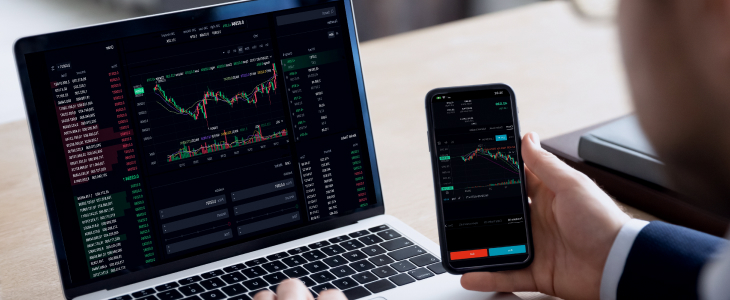
One of the unique aspects of forex trading is the ability to use leverage to trade larger positions than your account balance would otherwise allow. Leverage can amplify your profits, but it also increases your risks. Margin refers to the amount of money required to open a leveraged position, and it is crucial to understand how these concepts work to manage your risk effectively.
3. Learning Technical and Fundamental Analysis
Successful forex traders utilize both technical and fundamental analysis to make informed trading decisions. Technical analysis involves studying price charts and patterns to predict future movements, while fundamental analysis looks at economic indicators, interest rates, and geopolitical events that influence currencies. Familiarizing yourself with both forms of analysis is essential for developing a well-rounded trading approach.
Developing a Trading Strategy
Having a trading strategy is essential for achieving consistent profitability in forex trading. A solid strategy outlines your trading goals, risk tolerance, entry and exit points, and the criteria for selecting trades. Here are different types of trading strategies you might consider:
- Day Trading: Buying and selling currency pairs within a single trading day to capitalize on short-term movements.
- Swing Trading: Maintaining positions for several days or weeks to benefit from medium-term trends.
- Scalping: Making rapid trades to profit from small price changes, often executing multiple trades within minutes.
- Position Trading: Holding trades for an extended period based on long-term trends and fundamental analysis.
Risk Management in Forex Trading
Effective risk management is crucial for protecting your capital. It involves setting stop-loss orders to limit potential losses, determining how much of your capital to risk per trade, and curtailing the size of your positions based on your risk tolerance. A general rule of thumb is to risk no more than 1-2% of your trading capital on a single trade.
Education and Continuous Learning
As a beginner in forex trading, continuous education is vital. Markets are always evolving, and staying informed about changes in economic policies, technology, and trading strategies can help you stay ahead. Enroll in online courses, join trading forums, and read books to deepen your understanding and hone your skills. Practice trading with a demo account to gain experience without risking real money.
Conclusion
Forex trading can be a rewarding venture for beginners willing to invest time in learning and developing their skills. By understanding the basics of currency pairs, choosing the right trading platform, learning analytical techniques, and implementing a solid trading strategy, you can set yourself up for success in the forex market. Remember that patience, discipline, and continuous education are necessary components for achieving long-term profitability in trading. Start your journey today, and embrace the financial opportunities that forex trading can provide!